
At Alliance Leisure, innovation is consistently at the forefront of our strategy and is central to how we approach a project. To make sure we’re consistently bringing the right ideas to our clients at the right time, we’ve launched a new Product Steering Group focused on emerging trends and proven products across construction, leisure and wellbeing.
Read on to join a conversation between our Strategic Engagement Director, Paul Woodford, and Director for Scotland, Jonny Curley, as they talk about why it matters and what it’s already delivered.
“Innovation needs a process, not just enthusiasm”
PW: We talk a lot about being progressive in the market but the truth is, you only stay progressive if you have a method for it. That’s exactly why we set up the Product Steering Group: to continuously evaluate what’s changing, what’s maturing and what’s genuinely worth bringing forward for our clients.
JC: And it’s timely. Across the UK we’re seeing councils and operators under pressure to do more with less, but still deliver experiences that feel modern, inclusive and commercially resilient. Innovation can’t be accidental; it needs structure.
What is the Product Steering Group, in practical terms?
PW: It’s a cross-business group that looks at new products, emerging trends and new delivery approaches — from wellbeing concepts and activity attractions, to materials, build methods and digital tools. The steering group is there to sense-check ideas and answer a simple question: does this improve outcomes for our clients and communities?
JC: We’re also using it to share learning faster. A brilliant idea piloted in one region shouldn’t take years to become “normal practice” elsewhere. With the steering group, we’ve got a clear route from market scanning → evaluation → real-world selection → delivery guidance.
So what does “evaluation” actually involve?
PW: We’re deliberately balanced. We look at:
- User experience & participation: Will it genuinely engage people and broaden appeal?
- Commercial performance: Revenue potential, throughput, staffing impact, lifecycle costs.
- Operational reality: Maintenance, supplier support, reliability, training requirements.
- Design & build implications: Space planning, building services, compliance, integration.
- Inclusivity & accessibility: Who does this invite in — and who might it exclude?
- Sustainability: Materials, energy, durability, and long-term adaptability.
JC: And we’re not just chasing “new.” Some of the best innovation is selecting the right proven product and applying it in a new context — especially in the public sector, where value and longevity matter.
Can you share examples of innovation and product selection already coming through?
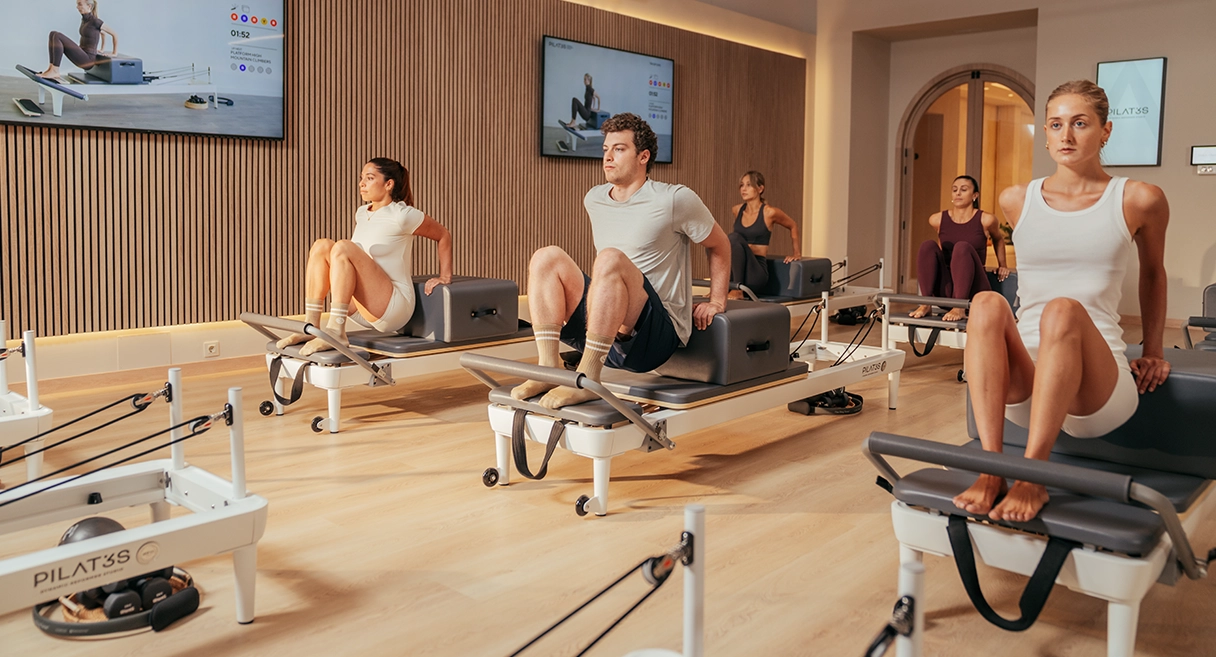
PW: Definitely. A great example is the installation of Reformer Pilates at Kore Sandwell. That’s a trend we’ve seen accelerating — but our approach is to look beyond the headline. We ask: what does it mean for the member journey, programming, instructor capability, studio design, scheduling, and yield per square metre?
JC: It’s a good illustration of the steering group mindset. Reformer Pilates isn’t just “equipment”; it’s a proposition. When it’s done well, it can widen the wellbeing offer, attract new audiences, and create a premium experience within a broader facility.
PW: And we’ve been innovating for over 20 years, right back to when we built Inside Spa for Pendle Borough Council— putting in place the first spa within a public sector facility. That kind of project shifts expectations of what “public leisure” can include: recovery, relaxation, holistic wellbeing — not just traditional gym-and-swim.
JC: And importantly, it does it in a way that stays grounded in accessibility and community outcomes. That blend of commercial sense and public value is where our clients are heading.
How are you thinking about multi-generational activities in leisure facilities?
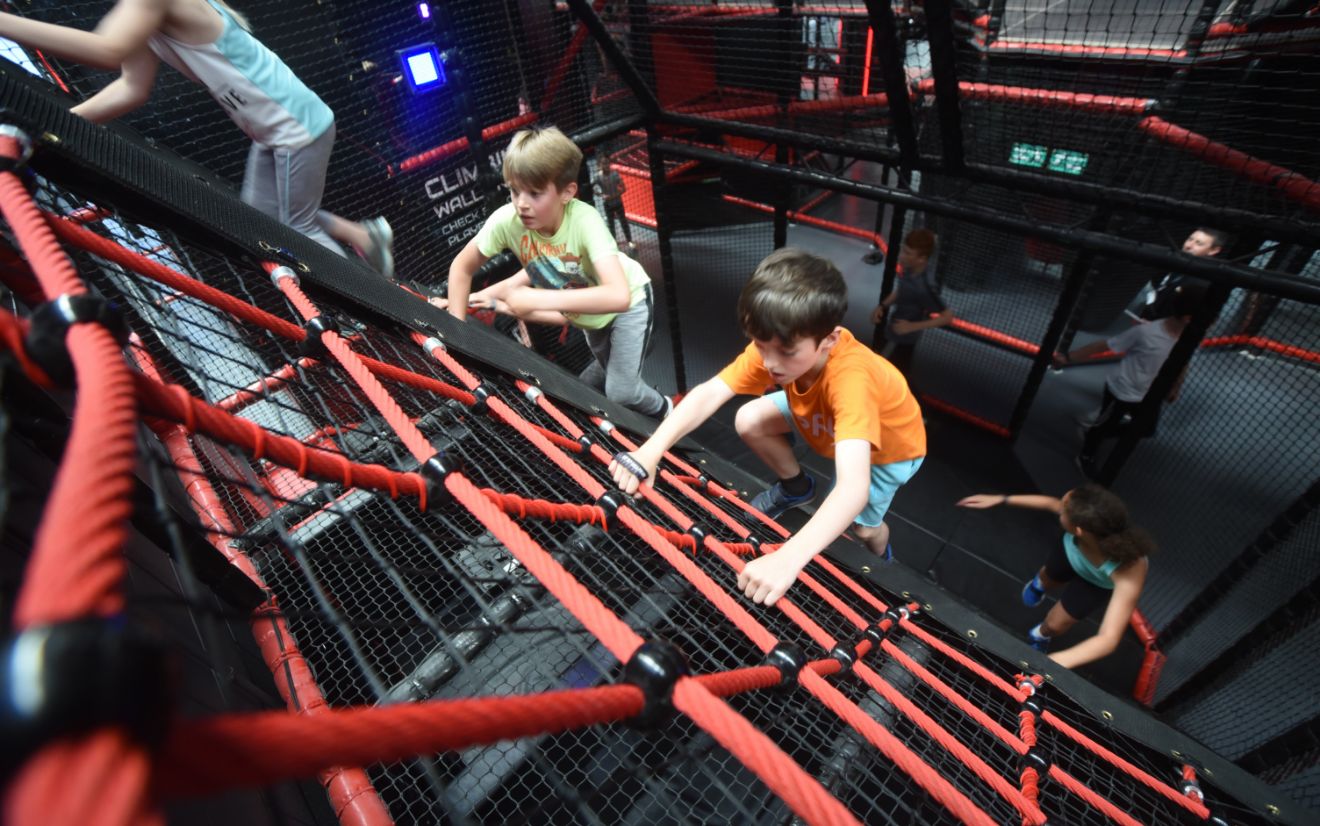
JC: For us, it’s one of the biggest shifts. The most successful centres aren’t just adding a single “attraction” — they’re designing spaces where children, teens, parents and even grandparents can all be active together. That can include everything from super play and interactive zones to climbing and team challenges, all sitting alongside the core gym-and-swim offer.
PW: And that’s where products like TAGactive can have a role — as one element within a wider multi-generational play mix. The steering group helps us decide when it’s the right fit, how it should be configured, and what needs to be in place operationally. We look closely at flow, supervision, safeguarding, accessibility and how it complements the rest of the building, rather than treating it as a standalone bolt-on.
Beyond those examples, what else are you seeing gaining momentum?
PW: We’re seeing strong growth in offers that broaden participation across life stages and make leisure centres feel more like modern community hubs. In particular:
- Active ageing: strength, balance and mobility offers, inclusive equipment choices and layouts, and programming that supports longer-term health outcomes.
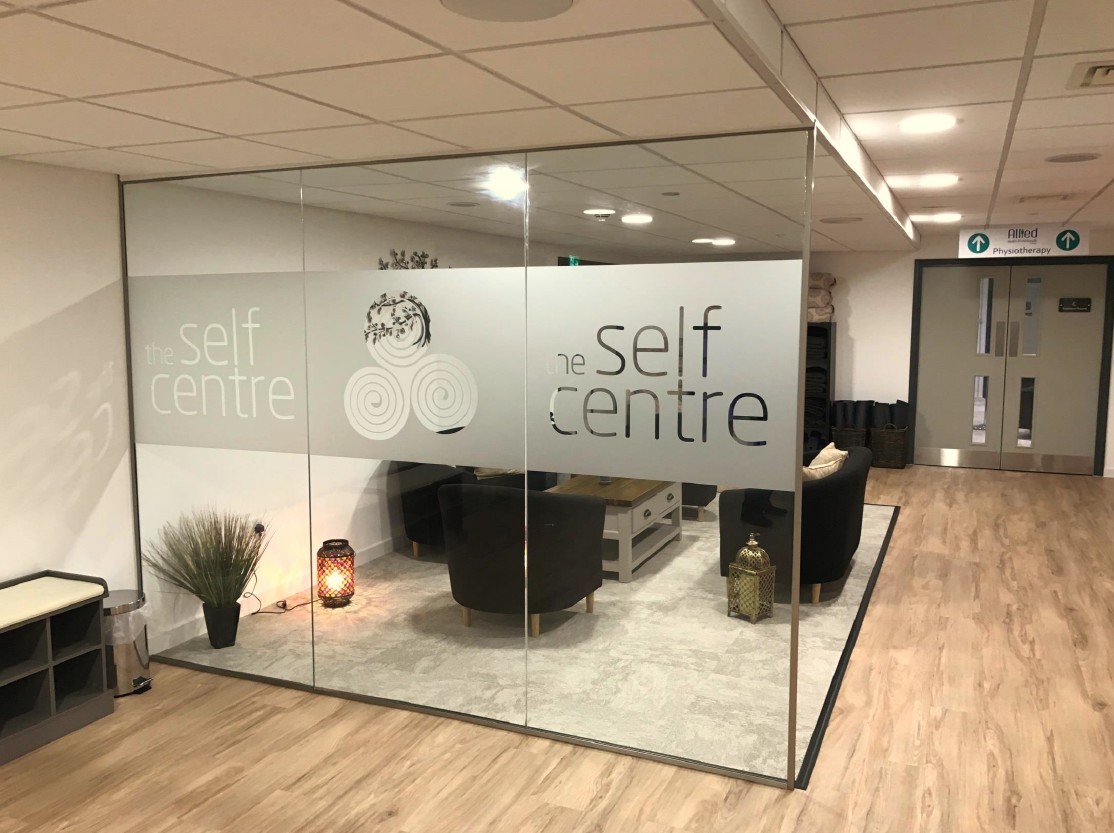
- Wellness and recovery: mind-body and small-group experiences, premium-but-accessible recovery spaces, and wellbeing offers that complement traditional fitness.
- Co-location of services: leisure alongside libraries, health and wellbeing services, community spaces and other partners — creating higher footfall and more joined-up provision.
- Super play and family activity: bigger, more inclusive play zones and indoor-outdoor connections that encourage longer dwell time and repeat visits.
- Padel: one of the fastest-growing participation sports, with strong commercial potential when it’s planned properly.
JC: The common thread is that these aren’t “add-ons.” When they’re planned around the community and the operating model, they strengthen identity, increase dwell time and widen the audience mix – which is exactly what clients need right now.
How does construction innovation connect to leisure and wellbeing innovation?
PW: They’re linked. If we’re bringing new experiences into facilities, we also need to stay current on how buildings are delivered and futureproofed — from low-carbon materials and more efficient building services to smarter layouts and design decisions that reduce whole-life cost.
JC: And in many public projects, the question is: how do we create something modern and aspirational but robust enough to operate well for years? That’s why our steering group sits across construction, leisure and wellbeing, not in a single silo.
What should clients and partners expect from this going forward?
PW: A clearer point of view, backed by evidence and delivery experience. The steering group will help us share what we’re learning: what’s emerging, what’s proven and what’s right for different facility types.
JC: And it strengthens how we collaborate. We want to be a partner that helps clients make confident decisions — not just about what’s exciting, but what’s sustainable, inclusive, operationally sound and commercially smart.
Final thought?
PW: Innovation doesn’t mean chasing every trend. It means continuously testing what’s next and selecting what genuinely improves outcomes.
JC: Exactly. And with the Product Steering Group in place, we’re even better positioned to help clients create facilities that communities feel proud of, both now and in the future.