
Our Reflections from the Green Goals Conference 2026
I recently attended the Green Goals Conference which brought together leaders from sport, leisure, public health, local government, planning, energy, nature recovery and the built environment. Its purpose was to move the sector from strategy and policy language into practical delivery. Across the day, the same message repeatedly surfaced: climate action, public health, participation, equality and community regeneration are interconnected. The task is not simply to lower carbon; it is to protect and improve the places that enable people to move, meet and belong.
1. Climate change impacts and why adaptation is essential – Olivia Shears, Climate Change Committee
Olivia Shears’ keynote established the scale and urgency of the challenge. Her slides showed global temperatures continuing to warm at a record pace and the need to plan for approximately 2°C of warming by 2050 and 4°C by 2100. These increases will have significant impact on how we exercise and play sports in the future.
UK heatwaves are expected to become more frequent, longer and more intense, while flooding, drought, reduced river flows and wildfire risk will all place greater pressure on communities, infrastructure and public services.
For sport, these risks are operational rather than abstract. Flooded pitches cancel fixtures and reduce participation; extreme heat places players, staff and spectators under health pressure; water stress threatens grass and playing surfaces; and repeated disruption can make activity less accessible. The implication is that adaptation must be built into facility design, maintenance, emergency planning, programming and capital investment. The Climate Change Committee’s wider message is equally clear: damage is already occurring, early action is cheaper, and leadership is required to deliver adaptation at sufficient scale and speed.
2. Nature, access and prevention – Dave Bell, Natural England
Dave Bell positioned nature as essential public-health infrastructure. Access to good-quality green and blue space supports movement, mental wellbeing, social connection and prevention, while also helping towns and cities respond to poor air quality, overheating and flood risk. Natural England’s Green Infrastructure Framework gives local authorities and partners practical standards and mapping tools to identify gaps, connect habitats and target investment where health inequalities and environmental pressures are greatest.
The conference’s “participation–climate change–inequalities” jigsaw captured this neatly: action in one area affects the others. Better active-travel routes, nature-rich corridors and inclusive outdoor spaces can increase participation while improving biodiversity and climate resilience. Local Nature Recovery Strategies, community co-design and partnerships with Wildlife Trusts, clubs and local authorities provide a route from broad ambition to locally owned outcomes.
3. From sustainability strategy to community outcomes – Denise Ludlam, Sport England
Denise Ludlam translated Sport England’s Every Move strategy into a 2050 vision for the sector: active design as the norm; zero-carbon and climate-resilient facilities; thriving, accessible nature; and sports venues operating as community hubs alongside health and other essential services. The ambition is regenerative rather than merely “less harmful” – facilities and organisations should help restore nature, strengthen local systems and create wider social value.
Sport England’s Regenerative Ladder provides a practical route from Starting and Progressing through Sustainable and Restorative to Regenerative. Organisations move from basic knowledge and internal actions to measured outcomes, external projects, shared resources, partnership leadership and innovation. Its maturity tool asks organisations to assess six linked themes: carbon emissions, circular economy, blue-green environments, biodiversity gain, inequalities and organisational enablers.
4. People, planet and greener practice – Dr Katrina Davies, Greener Practice
Dr Katrina Davies connected planetary health directly to everyday healthcare. Her slides illustrated a broad chain of impacts: heat-related illness and deaths; flooding that interrupts care; air pollution and respiratory disease; changing patterns of vector-borne and diarrhoeal illness; food and water insecurity; displacement; and mental-health consequences. The NHS is also part of the problem as well as the response, accounting for roughly 4–5% of the UK’s carbon footprint.
The key opportunity is prevention. Physical activity, cleaner air, active travel, healthier food, greener neighbourhoods and stronger communities can reduce demand on healthcare while improving quality of life. Greener Practice’s principles emphasise prevention, patient empowerment, efficient care pathways and lower-carbon clinical alternatives where these maintain or improve outcomes. The People’s Emergency Briefing reinforced the need to communicate climate and nature risks clearly, collectively and without specialist jargon.
5. The future leisure facility: lower carbon, higher social value – Community Leisure UK and GLL
Jennifer Huygen and Jeremy Gould highlighted a difficult cycle across public leisure: ageing buildings create maintenance backlogs and high energy use; high bills reduce the money available for investment; and operators often have limited control over capital decisions. Swimming pools are particularly energy-intensive because water and air must be continuously heated, treated and circulated. Conference data showed maintenance and energy costs as the most prominent operating pressures, with decarbonisation competing against urgent repairs for scarce capital.
The scale of renewal is significant. The conference cited £15.5 billion of investment required in Scotland alone over 25 years to address condition and ageing infrastructure, retrofit for net zero and improve accessibility and inclusion. The Sport Scotland estate review confirms that many facilities are already beyond their design life and that long-term planning, better data and cross-sector partnership are essential.
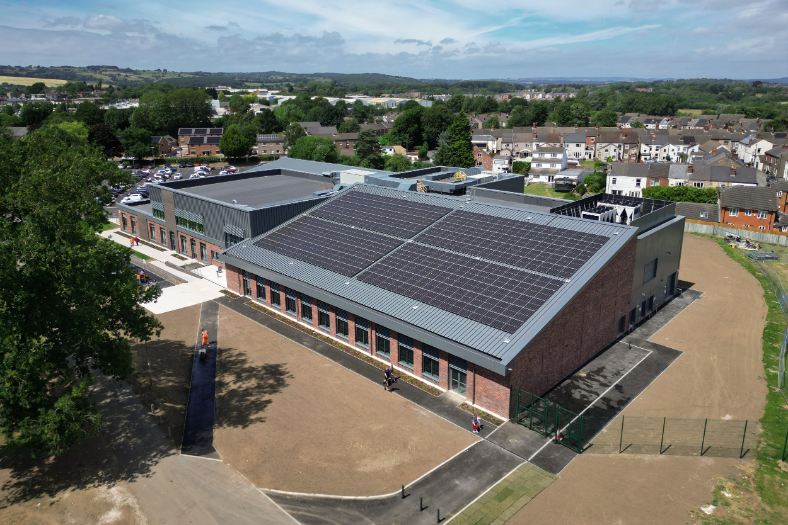
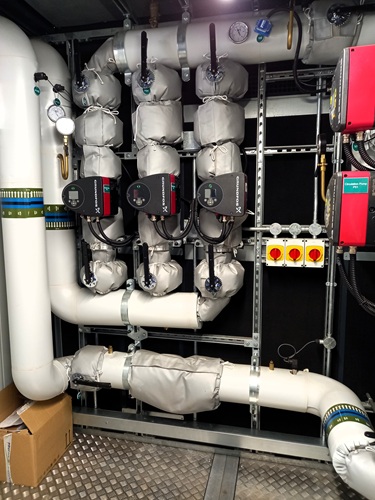
Public Sector Decarbonisation Scheme projects have demonstrated what can be achieved, but the discussion also raised the question of what happens when grant programmes end. Successful projects require landlords and operators to work together, an investable business case that captures whole-life savings, and clear social-value outcomes. The future leisure facility is therefore not simply an efficient building: it is a resilient community asset that supports prevention, inclusion, participation and local regeneration.
6. Greener Game, stronger communities – The FA and E.ON Next
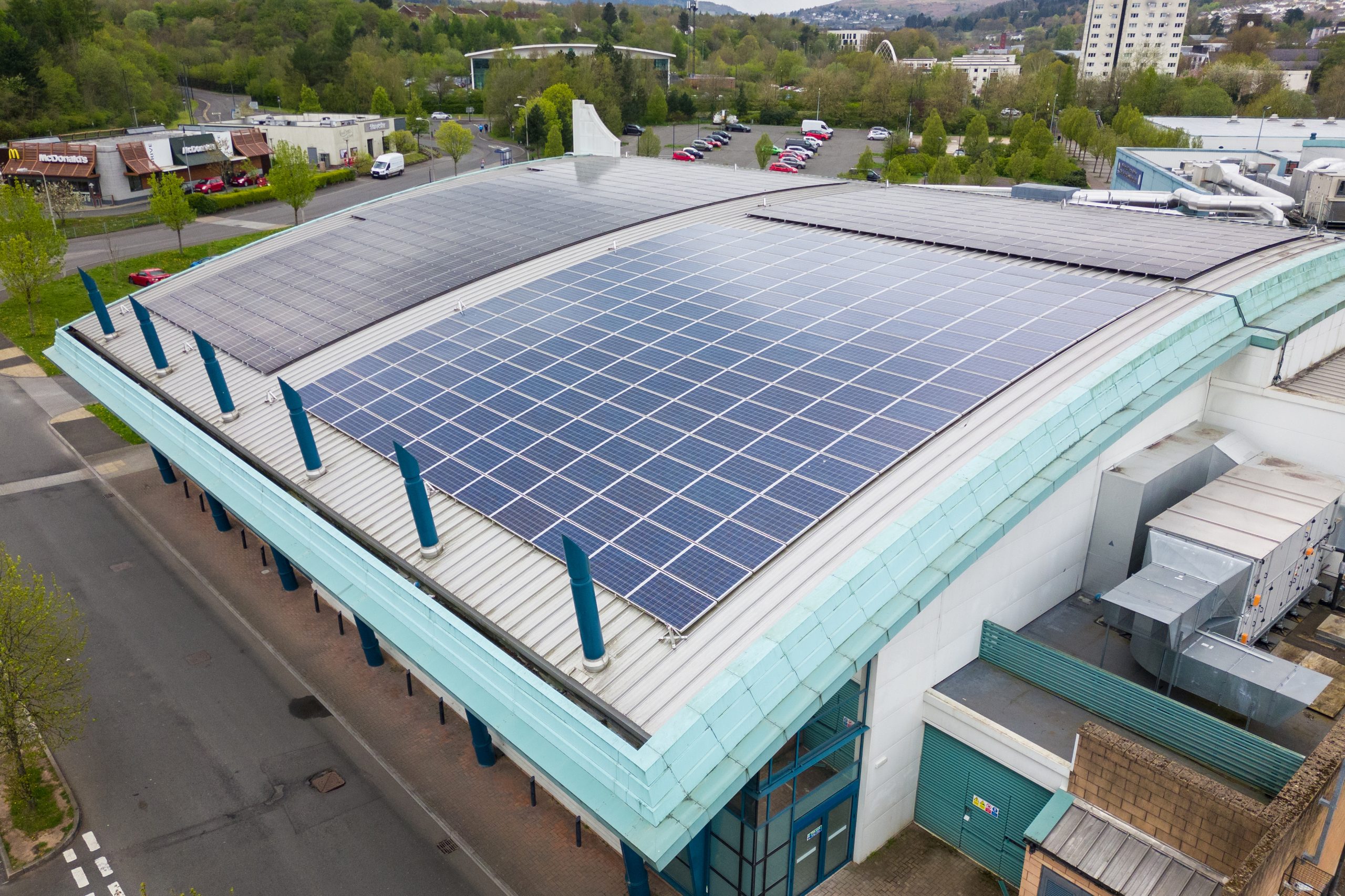
The Greener Game programme provided the day’s clearest example of turning sustainability into a scalable delivery pathway. Grassroots clubs face rising costs from floodlighting, heating and ageing clubhouses. The programme combines simple online guidance, energy support packs, free audits and funded upgrades such as solar panels, battery storage, LED lighting and insulation.
The conference reported hundreds of clubs moving through this journey, with more than 120 audits completed. Early results included energy-consumption reductions of around 25%, substantial bill savings for individual clubs, money reinvested into grassroots activity and greater confidence to discuss energy use. E.ON’s public update confirms that more than 400 clubs were already making savings and efficiencies by June 2026. This makes the programme more than a carbon initiative: it helps clubs remain open, affordable and rooted in their communities.
Overall conclusions and practical implications
- Treat climate adaptation and decarbonisation as core business continuity, asset management and safeguarding issues – not optional sustainability extras.
- Start with evidence: assess climate risks, energy use, estate condition, accessibility, participation gaps and the organisation’s maturity level.
- Prioritise “no-regrets” measures that cut costs and improve resilience now, while building longer-term capital plans for heat, flooding, water, energy and ageing assets.
- Design every project around combined outcomes: lower emissions, healthier lives, reduced inequalities, stronger biodiversity and greater community value.
- Work in partnership. Local authorities, operators, clubs, health bodies, funders, nature organisations and energy specialists each hold part of the solution.
The lasting message from Green Goals 2026 was one of practical optimism: the sector understands the challenge, workable models already exist, and sustainability can strengthen rather than constrain sport. The next step is disciplined implementation – moving from isolated projects to a regenerative approach in which facilities, spaces and organisations actively create healthier, fairer and more resilient communities.